Who this workflow is for
Solo founders, marketers, consultants and small teams that create several deliverables from the same research.
Runable Workflow Guide
Runable is easiest to judge with a concrete workflow. This page uses one practical scenario: turning scattered research into a brief, then into a landing page outline, slide structure and follow-up content.
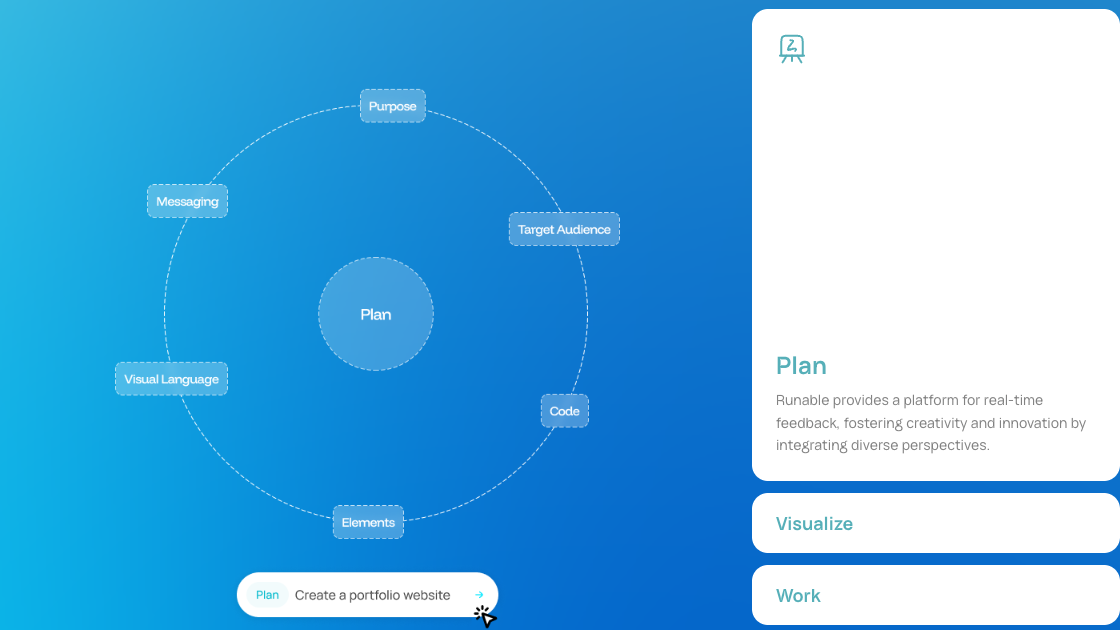
Workflow Goal
The goal is not to make Runable write everything perfectly. The goal is to reduce the handoffs between research, planning, page structure, slide outline and follow-up content while keeping the same context.
Solo founders, marketers, consultants and small teams that create several deliverables from the same research.
Audience, goal, source notes, offer, constraints, proof points, objections and desired output formats.
A brief, page outline, slide structure, FAQ draft and follow-up content ideas.
Where The Workflow Broke
The workflow became useful only after I added a human review step at the end of every stage. Runable could organize notes, draft a page outline and suggest supporting assets, but I still had to decide which claims were safe, which examples were strong and which assumptions needed checking. That is why I design the workflow around checkpoints instead of one long generation. The tool helps most when it keeps context moving. The operator still owns judgment. Once I accepted that split, Runable became more useful: not as an autopilot, but as a way to keep the project from scattering across five tools.
Choose the workflow by the handoff it removes. Runable is strongest when one source of context needs to become several useful assets.
| Decision scenario | Best workflow | Why | Next page |
|---|---|---|---|
| Which workflow saves the most time? | Research notes to brief to page outline. | It removes repeated setup across writing, planning and review. | Run the tutorial |
| Which workflow should teams start with? | Internal brief to report, proposal or launch plan. | Teams benefit when everyone reviews the same source of truth before assets split. | Check team and safety questions |
| Which workflow is not suitable? | One-off chat, pure coding, final legal copy or specialist visual polish. | Those jobs usually fit a narrower tool better. | Compare alternatives |
| When does pricing become easier to justify? | When this workflow repeats weekly and saves time in at least two stages. | The paid plan should follow proven workflow value, not curiosity. | Check pricing fit |
Step-by-Step Process
This is the workflow I would run before deciding whether Runable deserves a paid plan. It is specific enough to expose both strengths and limitations.
| Stage | Runable task | Human check |
|---|---|---|
| 1. Organize notes | Group raw notes into themes, claims, evidence, objections and gaps. | Remove weak sources and unsupported assumptions. |
| 2. Build the brief | Create a brief with audience, goal, angle, proof and next actions. | Confirm the angle matches the business goal. |
| 3. Draft the page outline | Turn the brief into hero, sections, comparison points, FAQ and CTA direction. | Check claims, pricing, links and buyer promises. |
| 4. Create supporting assets | Generate a slide outline, short summary and follow-up content ideas. | Make sure the message stays consistent across formats. |
| 5. Prepare review notes | List risks, missing facts and what should be verified before publishing. | Decide whether the output is ready for editing or needs another pass. |
This is the timing pattern I would use for a first serious test.
| Time | Stage | Decision point |
|---|---|---|
| Minute 0-10 | Collect notes, audience, goal and constraints. | Is the source material clear enough to use? |
| Minute 10-20 | Ask Runable for a structured brief. | Are facts separated from assumptions? |
| Minute 20-35 | Turn the brief into a page outline or slide structure. | Did context carry over cleanly? |
| Minute 35-45 | Ask for risks, missing facts and review notes. | What must a human verify? |
| Afterward | Edit, fact-check and decide whether to repeat the workflow. | Did it save enough handoffs to justify paying? |
Example Prompt
Use a prompt that tells Runable the role, goal, audience, source material and review standard. The clearer the workflow, the easier it is to judge output quality.
Example: Act as a launch strategist. Use these notes to create a practical brief for [audience]. Then turn the brief into a landing page outline, a 6-slide presentation outline and five follow-up content ideas. Separate confirmed facts from assumptions and list what a human should verify.
The useful part is the messy middle: moving from scattered input to organized deliverables. This is why the pricing decision should be based on repeated workflows, not one impressive output.
The same research can feed multiple outputs without rebuilding the prompt each time.
It can turn notes into briefs, outlines and review lists before final editing.
Teams can use it for recurring briefs, proposals, reports, content plans and launch assets. If that becomes weekly, check the pricing guide.
It helps map buyer questions, comparison points, FAQ topics and final review checklists. If you only need one asset, compare alternatives.
Runable should not be treated as a final approval system. It can help prepare work, but humans still own accuracy and judgment.
Pricing, product claims, legal language, client promises, source links, data interpretation and security-sensitive details.
Run the tutorial first, then compare Runable with the alternatives if the workflow feels too broad for your needs.
Test a research-to-brief-to-page workflow first. It has enough handoffs to show whether Runable is actually reducing friction.
Use a clear goal, audience, source notes, constraints, examples, preferred output format and a manual review checklist.
Not always. It is strongest when it reduces coordination across tools, not when one specialist feature needs to be best in class.
Humans should review facts, pricing, legal claims, client promises, sources, brand voice and anything that affects a business decision.
Teams should start with repeatable internal workflows such as briefs, reports, proposals, launch planning and content operations.
Workflow Verdict
If your work is only one prompt and one answer, a chat tool may be enough. If the work crosses formats, Runable becomes easier to justify. Read the full review and FAQ before you turn it into a paid workflow.