Best For
- Solo Founders
- Indie Hackers
- Startup Teams
- Product Builders
- Content Creators
- AI Power Users
Independent Runable Review 2026
Can One AI Agent Really Replace Your Entire AI Toolbox?
Short on time? If you're a solo founder or indie builder looking to simplify your AI workflow, Runable is one of the few tools I'd genuinely recommend trying in 2026.
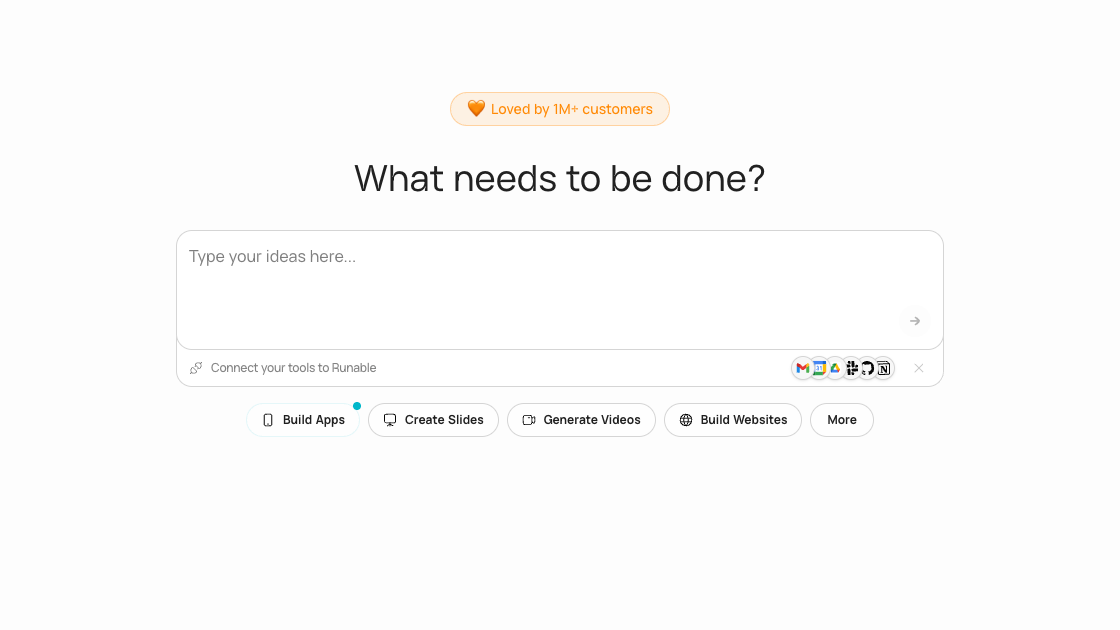
Quick Verdict
When I first heard about Runable, I was skeptical.
Every new AI platform claims it can replace half of your software stack.
Most can't.
After spending a week rebuilding my actual workflow inside Runable, I came away with a different conclusion.
Runable doesn't replace ChatGPT.
It doesn't replace Claude.
It doesn't replace Gamma.
What it really replaces is the constant switching between all of them.
That turned out to be a much bigger productivity improvement than I expected.
If you're already juggling multiple AI tools every day, Runable is one of the most interesting workflow platforms I've tested this year.
If you only use AI occasionally to brainstorm ideas or write emails, ChatGPT alone will probably be enough.
At a Glance
A quick decision snapshot for readers who want the rating, fit, and workflow value before reading the full review.
| Overall Rating | ⭐⭐⭐⭐⭐ 9.3 / 10 |
|---|---|
| Best For | Solo Founders, Indie Hackers, Startup Teams, Product Builders |
| Not Ideal For | Casual AI users, teams needing highly specialized creative tools |
| Learning Curve | Easy. |
| Time to First Result | Around 10–15 minutes |
| Workflow Improvement | ★★★★★ |
| Would I Pay For It? | ✅ Yes |
Start Here
If you are deciding whether Runable is worth your time, do not read randomly. Start with the review, check pricing, then pick one tutorial or workflow that matches your real work.
Understand the hands-on verdict, who Runable is for and where it still needs human review.
Compare the plan value against your weekly workflow volume before you upgrade.
Use a structured first project instead of testing Runable with a vague prompt.
Decide when ChatGPT, Claude, Gamma, Canva or Runable makes more sense.
Match Runable to a real use case like research, landing pages, content or presentations.
Answer the common questions about replacement value, pricing, outputs and alternatives.
I'm a solo founder, so my work changes constantly throughout the day.
One hour I'm researching competitors.
The next I'm writing articles, planning product launches, building landing pages, or creating presentations.
None of those tasks are particularly difficult.
The frustrating part is constantly moving between different AI tools.
A typical project usually looked something like this:
Each tool was excellent at one thing.
But every project meant opening another browser tab, rewriting prompts, copying content, and trying to keep everything organized.
Eventually, managing the tools became almost as time-consuming as doing the work itself.
Runable promised something different.
Instead of offering another chatbot, it promised a workflow where multiple tasks could stay connected inside one project.
That sounded much more valuable than simply generating another AI response.
So rather than relying on marketing videos or feature lists, I rebuilt part of my weekly workflow inside Runable to see whether it could genuinely simplify the way I work.
Most reviews compare Runable directly with ChatGPT.
I don't think that's the right comparison.
ChatGPT is excellent for conversations.
Claude is fantastic for writing.
Gamma builds beautiful presentations.
Each solves one problem very well.
The problem begins when a single project needs all of them.
Take writing an affiliate review as an example.
The process isn't just writing.
It usually includes:
None of these steps are difficult by themselves.
Together, they become surprisingly fragmented.
I wasn't looking for another AI assistant.
I was looking for a workflow that felt less fragmented.
That became the standard I used throughout this review.
The first thing I noticed was that Runable felt more like a workspace than a chatbot.
Instead of thinking about prompts, I started thinking about projects.
That small shift changes how you approach the platform.
The interface is clean and surprisingly easy to understand.
Within the first hour, I had already completed tasks that would normally involve switching between several different applications.
The experience wasn't perfect.
Some outputs still needed editing, and I occasionally had to clarify my instructions.
But compared with constantly jumping between multiple AI tools, the overall experience felt smoother and more focused.
Runable isn't trying to produce the smartest single response.
It's trying to reduce friction across an entire workflow.
After my first day, I already felt the difference.
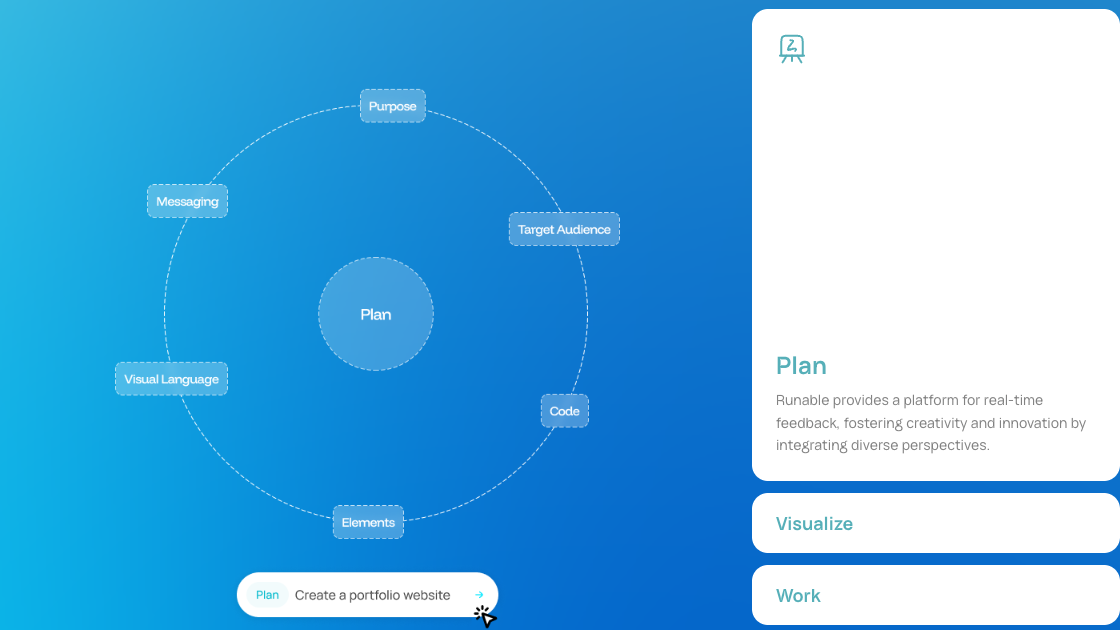
Homepage Proof
The homepage positioning matters because it sets a high bar. Runable is not only promising a better answer; it is promising a smoother way to move from idea to finished work.
I tested whether research, writing, planning and deliverables could stay connected.
I judged the tool by reduced handoffs, not by whether every first draft was perfect.
I looked for usable briefs, page structures, outlines and project assets that could be improved quickly.
Instead of generating random demo content, I rebuilt four real workflows that I complete almost every week.
My goal wasn't to see whether Runable could produce perfect outputs.
It was to see whether it could reduce the number of tools I needed to finish real work.
The first challenge was creating a long-form affiliate review.
Normally this involves research, outlining, drafting, editing, and formatting across several AI platforms.
Inside Runable, I completed most of that workflow without leaving the project.
The first draft wasn't ready to publish, but it was surprisingly well structured.
Instead of spending time moving content between different AI tools, I spent that time improving the article itself.
Verdict
A noticeable improvement for long-form content creation.
Next, I asked Runable to generate a landing page for a fictional SaaS product.
The structure was stronger than I expected.
The headline was clear.
The page hierarchy made sense.
The calls to action were usable.
I still rewrote sections of the copy, but instead of staring at a blank page, I was refining an existing draft.
That alone saved a considerable amount of time.
Verdict
Excellent as a starting point for marketing pages.
This became one of my favorite workflows.
I used Runable to collect information, summarize research, organize notes, and prepare a simple action plan.
Normally, that information would be scattered across browser tabs, AI chats, and documents.
Here, everything stayed connected inside one project.
It felt less like asking isolated questions and more like collaborating with an assistant that understood the entire context.
Verdict
One of Runable's strongest strengths.
Finally, I tested presentation creation.
The generated outline was logical and well organized.
Although I still adjusted the design manually, the hardest part—building the presentation structure—was already finished.
That reduced a surprising amount of repetitive work.
Verdict
Very useful for internal presentations and client proposals.
Test Your Own Workflow
The clearest way to evaluate Runable is to run a normal weekly task through it and see whether it reduces handoffs across research, writing, planning and deliverables.
One experiment completely changed how I evaluated Runable.
I asked it to generate an entire product launch package that included a landing page, blog article, presentation outline, and marketing copy.
The writing stayed consistent across every asset.
The overall strategy remained aligned.
The visuals, however, weren't always consistent.
At first, I considered that a weakness.
Then I realized I had been using the wrong benchmark.
Runable wasn't trying to replace specialist tools.
It was trying to reduce the effort required to coordinate them.
That completely changed how I evaluated the platform.
The biggest surprise wasn't the writing quality.
It wasn't presentation generation.
It wasn't speed.
It was context.
For the first time, I wasn't explaining the same project to five different AI tools.
I explained it once.
Everything afterwards stayed connected.
That sounds like a small improvement.
After using Runable for a full week, I realized it was actually the biggest productivity gain.
The less time I spent managing software, the more time I spent improving the work itself.
That's ultimately what made Runable valuable to me.
This became the biggest advantage of using Runable.
Instead of jumping between multiple AI platforms, I stayed focused on the project itself.
Tasks that normally required several different applications became much more straightforward.
Even when I edited the final output manually, I still finished noticeably faster.
For solo founders and indie builders, reducing that mental overhead is a meaningful productivity boost.
Most AI tools help you complete individual tasks.
Runable encouraged me to think in complete workflows instead.
Rather than asking,
"Write me a blog post."
I found myself asking,
"Help me launch this product."
That simple shift often produced better results because the AI understood the broader objective instead of a single isolated task.
Choose ChatGPT if your primary goal is brainstorming, coding, or everyday conversations.
Choose Runable if your projects involve multiple steps that normally require switching between different AI tools.
Claude remains one of the strongest AI assistants for long-form writing and document analysis.
If your work revolves around writing alone, Claude is still an excellent choice.
If writing is only one part of a larger workflow that includes research, planning, presentations, and marketing, Runable provides a more connected experience.
Gamma is one of the best AI presentation tools available today.
If presentations are your main priority, Gamma is difficult to beat.
If presentations are simply one deliverable within a larger project, Runable makes more sense because everything stays connected inside the same workflow.
Buying Shortcut
Start with the workflow that wastes the most time today. If Runable removes enough switching and rebuilding, the value is easier to judge.
Not necessarily.
ChatGPT is one of the best conversational AI assistants available.
Runable focuses on connecting multiple tasks into one workflow, making it a better fit for project-based work.
Not completely.
During my testing, it reduced how often I needed other AI tools, but it didn't eliminate them.
Think of it as a workflow hub rather than a universal replacement.
If you're already paying for several AI tools and constantly moving work between them, I'd say yes.
If you only use AI occasionally, ChatGPT or other free options may already cover your needs.
From my experience, solo founders, startup teams, marketers, consultants, agencies, and creators managing multiple projects will get the most value.
My Recommendation
Here is the simple version of who should try Runable, who should compare it carefully, and who probably does not need it yet.
| User Type | Recommendation | Why |
|---|---|---|
| Solo Founders | Highly Recommended | The biggest benefit is reducing context switching between multiple AI tools. |
| Startup Teams | Recommended | Great for research, planning, documentation, and content workflows. |
| Content Creators | Recommended | Makes long-form content and marketing workflows much smoother. |
| Consultants & Agencies | Recommended | Useful for organizing projects and creating deliverables more efficiently. |
| Developers | Worth Trying | Helpful for planning and documentation, though coding specialists still have advantages. |
| Casual AI Users | Probably Not Necessary | ChatGPT alone is likely enough if AI isn't part of your daily workflow. |
Final Verdict
When I started testing Runable, I expected another AI assistant.
What I found was something more useful.
Runable isn't trying to generate the smartest response.
It's trying to make your entire workflow smoother.
That turned out to be the biggest productivity improvement during my week of testing.
No, it won't replace every specialist tool you already use.
And no, every output won't be perfect.
But it does reduce the friction that comes from managing multiple AI platforms every day.
For me, that's where the real value lies.
It keeps complex projects organized while dramatically reducing context switching between AI tools.
Specialized tools still produce better results for certain individual tasks.
Yes.
Not because it replaced ChatGPT.
Not because it replaced every tool in my workflow.
I'd pay for it because it reduced the time and mental effort required to move a project from idea to completion.
For solo founders and independent builders, that's a worthwhile investment.
Overall Rating: ⭐⭐⭐⭐⭐ 9.3 / 10
About The Reviewer
I'm a solo founder who builds affiliate websites, AI-powered projects, and digital products.
Rather than reviewing software based on marketing pages or feature lists, I test tools inside real workflows to understand how they affect productivity, decision-making, and day-to-day work.
My goal isn't to tell you what a product can do. It's to help you decide whether it's actually worth paying for.
I rebuilt weekly tasks instead of relying on feature lists.
I checked where the outputs still needed editing, strategy or specialist tools.
I judged Runable by whether it saves enough time to justify paying for it.